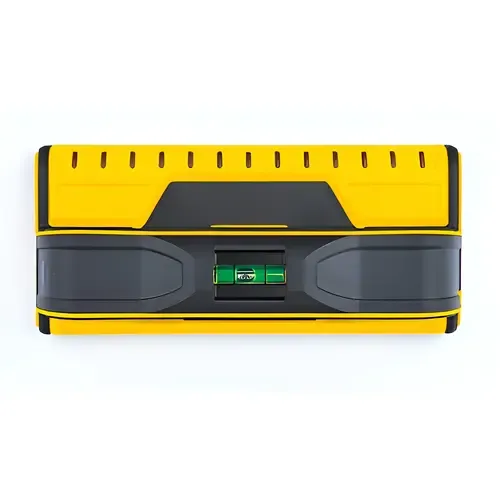
Franklin ProSensor M132, 13 Led/Sensor Stud Finder
SKU FSM13203MP
$47.09
In stock: 11 available
1
Save this product for later
Customer reviews
Reviews only from verified customers
No reviews yet. You can buy this product and be the first to leave a review.
Estimated delivery time
Shipping: 8–10 days
Pickup: tomorrow, 11:30 AM–05:00 PM
Franklin ProSensor M132, 13 Led/Sensor Stud Finder
Product Details
UPC: 853435004880
Brand: Franklin Sensor
Weight: 0.50 lbs
Franklin ProSensor M132, 13 Led/Sensor Stud Finder
The Franklin Sensors ProSensor M132 Professional Stud Finder (FSM13203MP) delivers fast, accurate, and easy-to-read stud detection using advanced multi-sensor technology. Equipped with 13 precision sensors and 13 LED indicators, this professional stud finder identifies the location, edges, and center of hidden wall studs simultaneously, eliminating much of the guesswork associated with conventional stud finders.
Unlike traditional stud finders that typically use only one or two sensors, the Franklin ProSensor M132 utilizes 13 sensors working together to detect changes in density behind wall surfaces. Its extra-wide LED display provides a visual representation of stud locations, making it easier to identify single studs, double studs, and irregular framing configurations.
Featuring an impressive 1.7-inch maximum detection depth, the ProSensor M132 is designed to locate wood and metal studs behind drywall and other compatible wall materials. Its intelligent sensing technology automatically adjusts to changes in material and depth, eliminating the need to switch between standard and deep-scan modes.
Operation is simple: press and hold the activation button, place the stud finder against the wall, and begin scanning. There is no complicated calibration process, and the LED indicators immediately display detected objects as the tool moves across the surface.
Additional features include a built-in bubble level, integrated ruler, and convenient pencil caddy, making the ProSensor M132 a practical tool for contractors, carpenters, electricians, maintenance professionals, and homeowners.
Whether installing shelving, mounting televisions, hanging cabinets, or locating framing members for renovation projects, the Franklin Sensors ProSensor M132 provides the precision and convenience needed to locate hidden studs quickly and confidently.
Key Features / Specifications
- Brand: Franklin Sensors
- Manufacturer Part Number: FSM13203MP
- Model: ProSensor M132
- UPC: 853435004880
- Product Type: Professional Electronic Stud Finder
- Detection Technology: Multi-Sensor Density Detection
- Number of Sensors: 13
- Number of LED Indicators: 13
- Maximum Detection Depth: 1.7 Inches
- Stud Detection: Wood and Metal Studs
- Stud Center Detection: Yes
- Stud Edge Detection: Yes
- Simultaneous Center and Edge Display: Yes
- Double Stud Detection: Yes
- Irregular Framing Detection: Yes
- Automatic Depth Adjustment: Yes
- Calibration Required: No
- Operating Modes: Automatic Single-Mode Operation
- Display Type: LED Indicator Array
- Built-In Bubble Level: Yes
- Integrated Ruler: Yes
- Pencil Caddy: Yes
- Power Source: 2 AA Alkaline Batteries
- Battery Voltage: 1.5V per Battery
- Rechargeable Batteries Recommended: No
- Activation: Press-and-Hold Button
- Approximate Product Length: 7.5 Inches
- Approximate Product Width: 2.45 Inches
- Approximate Product Height: 3.33 Inches
- Listed Product Weight: Approximately 0.5 lb
- Country of Origin: USA
- Application: Interior Wall Stud Detection
Key Features / Benefits
- 13 Precision Sensors: Detect changes in density across multiple points for improved stud identification.
- 13 LED Indicators: Provide a clear visual display of hidden stud locations.
- 1.7-Inch Detection Depth: Allows scanning through many common drywall and plaster wall assemblies.
- Simultaneous Center and Edge Detection: Displays stud boundaries and center locations without separate scanning procedures.
- Detects Wood and Metal Studs: Suitable for many residential and commercial wall framing systems.
- No Calibration Required: Begin scanning immediately without a separate calibration step.
- Automatic Sensing: Adjusts to variations in material and depth without manual mode selection.
- Extra-Wide Display: Helps identify single studs, double studs, and unusual framing configurations.
- Built-In Bubble Level: Convenient for checking horizontal alignment.
- Integrated Ruler: Provides quick measurements while locating studs.
- Pencil Caddy: Keeps a marking pencil conveniently accessible.
- Simple One-Button Operation: Press, hold, and scan.
- Battery Powered: Uses two common AA alkaline batteries.
- Professional and DIY Applications: Suitable for contractors, maintenance workers, and homeowners.
Ideal For
- Locating wood studs behind drywall
- Finding metal wall studs
- Mounting televisions and wall brackets
- Installing floating shelves
- Hanging cabinets
- Installing garage storage systems
- Mounting tool racks and organizers
- Hanging mirrors and heavy wall decorations
- Installing closet shelving
- Locating framing for remodeling projects
- Installing wall-mounted fixtures
- Interior renovation projects
- Carpentry and woodworking
- Electrical and plumbing installation planning
- Property maintenance
- Home improvement and DIY projects
Advanced 13-Sensor Detection Technology
The Franklin Sensors ProSensor M132 features 13 individual precision sensors that analyze density changes across the wall.
Conventional electronic stud finders commonly rely on one or two sensors to identify hidden framing. The M132 uses a wider array of sensors to examine multiple points simultaneously.
This allows the tool to identify changes in wall density and display the approximate location of hidden objects across its LED indicator array.
The multi-sensor design is especially helpful when locating studs of varying widths or working around unusual framing configurations.
13 LED Indicators for Easy Stud Identification
The M132 features 13 LED indicators positioned across the top of the tool.
As the stud finder moves across a wall, the LEDs illuminate to indicate areas where the sensors detect a change in density.
Rather than relying on a single indicator light or audible signal, the ProSensor provides a visual representation of the detected object's width and location.
This makes it easier to identify stud edges and determine the approximate center.
Center Indicator: Certain Franklin ProSensor configurations feature a center LED that changes to green when the stud's center is identified. This feature varies by model configuration and should not be assumed present on every M132 unit.
Detects Stud Centers and Edges Simultaneously
One of the ProSensor M132's most useful features is its ability to display the center and edges of a stud at the same time.
Traditional stud finders may require users to scan from both directions and manually calculate the stud center.
The Franklin M132 simplifies this process by illuminating LEDs corresponding to the detected stud location.
This can save time when preparing to install wall anchors, mounting brackets, shelving, and other fixtures.
1.7-Inch Maximum Detection Depth
The ProSensor M132 offers a maximum detection depth of 1.7 inches.
This allows the tool to detect studs behind many common interior wall materials, including drywall and certain plaster installations.
Detection performance depends on wall thickness, surface texture, material composition, and other conditions.
The 1.7-inch specification represents the manufacturer's maximum detection capability, not a guarantee of detection through every wall material.
Detects Wood and Metal Studs
The Franklin ProSensor M132 is designed to identify density changes associated with both wood and metal framing members.
This makes it useful in a variety of residential and commercial construction applications.
Wood studs are common in residential construction, while metal studs are frequently used in commercial buildings and interior partition walls.
The M132 can help locate either type without requiring a separate wood or metal detection setting.
Important: The tool senses density differences and does not positively identify the material of a detected object.
No Calibration Required
The ProSensor M132 eliminates the separate calibration procedure required by many conventional stud finders.
Simply press and hold the activation button and begin scanning.
The tool can be activated while positioned against the wall or before being placed against the surface.
This convenient design helps reduce setup time and makes the tool especially useful when checking multiple wall locations.
Automatic Depth and Material Adjustment
The M132 automatically responds to changes in wall density and sensing conditions.
There is no need to manually select between standard scanning and deep scanning modes.
This simplifies operation when moving between wall sections with different thicknesses or construction materials.
Extra-Wide Detection Display
The ProSensor M132's wide sensing area provides additional information about objects hidden behind the wall.
It can help reveal:
- Single studs
- Double studs
- Wider framing members
- Closely spaced framing
- Irregular stud configurations
- Changes in density near wall openings
This can be particularly helpful when working around windows, doors, corners, and other locations where framing may differ from standard stud spacing.
Built-In Bubble Level
The integrated bubble level provides a convenient reference for checking horizontal alignment.
This feature can be useful when planning shelf installations, mounting brackets, or positioning wall-mounted accessories.
The built-in level adds functionality without requiring a separate tool for quick alignment checks.
For critical installations, verify alignment with an appropriate dedicated level.
Integrated Ruler
The ProSensor M132 includes an integrated ruler for convenient measurements.
The ruler can assist with marking stud positions, checking spacing, and planning mounting locations.
Having a measuring reference built into the tool helps simplify common installation tasks.
Convenient Pencil Caddy
The integrated pencil caddy provides a convenient place to keep a marking pencil while working.
This allows users to locate studs and mark their positions without repeatedly setting down the tool to retrieve a pencil.
A marking pencil is not confirmed as included with the product.
Simple One-Button Operation
The ProSensor M132 is designed for straightforward operation.
To locate studs:
- Install two fresh AA alkaline batteries.
- Hold the stud finder by its designated handle.
- Press and hold the activation button.
- Place the sensing surface flat against the wall.
- Move the tool horizontally across the surface.
- Watch the LED indicators illuminate as framing is detected.
- Identify the stud edges and approximate center.
- Mark the desired mounting location.
- Scan vertically to help verify that the detected object follows a consistent framing path.
Keep the activation button pressed throughout the scan.
Operates on Two AA Batteries
The Franklin ProSensor M132 operates using two 1.5V AA alkaline batteries.
Common AA batteries make the tool convenient to maintain without specialized charging equipment.
Franklin Sensors instructs users not to use rechargeable batteries in this model.
Replace both batteries when power becomes weak, and do not mix old and new batteries.
Battery Inclusion: Not confirmed.
Useful for Mounting Shelves and Cabinets
Properly locating wall framing is important when installing shelves, cabinets, and other load-bearing fixtures.
The ProSensor M132 helps users identify potential fastening locations behind finished wall surfaces.
Its simultaneous edge and center display is particularly useful when positioning screws or mounting hardware near the center of a stud.
Always use appropriate fasteners and verify that the wall structure can support the intended load.
Ideal for Television Mounting
When installing a wall-mounted television, locating suitable framing members is an important part of proper installation.
The M132 can help identify potential stud locations for compatible mounting brackets.
Its wide LED display makes it easier to distinguish framing members and plan bracket placement.
Follow the television mount manufacturer's installation instructions and verify stud locations before drilling.
Suitable for Professional Contractors and Homeowners
The Franklin ProSensor M132 combines advanced sensing technology with simple operation.
Professional contractors can use it for routine wall framing identification, while homeowners can benefit from its intuitive LED display and lack of complicated calibration requirements.
The tool is useful for both occasional home improvement projects and frequent installation work.
Important Detection Limitations
The ProSensor M132 detects changes in density behind wall surfaces.
Because of this, the tool may respond to objects other than studs, including:
- Electrical wiring
- Water pipes
- Gas pipes
- Metal reinforcement
- Wall material irregularities
- Changes in plaster thickness
- Other hidden objects
The tool does not determine whether a detected object is safe to drill into.
Foil-backed insulation, metallic wallpaper, metal mesh, heavy surface textures, and unusual wall construction may interfere with detection.
Franklin Sensors does not recommend relying on this type of stud finder for all tile, roofing, flooring, or exterior wall applications.
Important Safety Information
Never assume a detected object is a stud without additional verification.
The M132 is not a dedicated live-wire detector and should not be used to establish that an area is free of electrical wiring.
Before drilling, cutting, or driving fasteners into a wall:
- Check for possible electrical wiring.
- Consider the location of water and gas piping.
- Verify the intended fastening location.
- Follow applicable electrical and construction safety procedures.
- Use appropriate mounting
Powered by Lightspeed
Display prices in:USD